Is Silver a Good Investment? What Beginners Need to Know in 2026
Last updated: March 11, 2026
Silver gained roughly 100% in 2025, breaking through $50 per ounce for the first time since 2011 before climbing past $60 (Sprott, 2026). That kind of move grabs attention. But a good year doesn't automatically make something a good investment — and silver's track record is more complicated than the recent headlines suggest.
“Silver combines monetary characteristics with growing industrial demand, giving it a different and potentially more dynamic growth profile,” explains Hiren Chandaria, investment strategist at Monetary Metals, in an interview with CBS News (January 2026).
So is silver worth your money? That depends on what you're buying it for, how much you're allocating, and whether you can stomach the ride. Here's what the data actually says, and what most guides leave out.
Check today's silver price before reading on.
TL;DR: Silver is in its sixth consecutive year of supply deficit, with industrial demand hitting a record 680.5 million ounces in 2024 (Silver Institute, 2025). It offers diversification and inflation protection but comes with 2-3x the volatility of gold and produces no yield. A 3-5% portfolio allocation is the standard recommendation for beginners.
Is Silver a Good Investment Right Now?
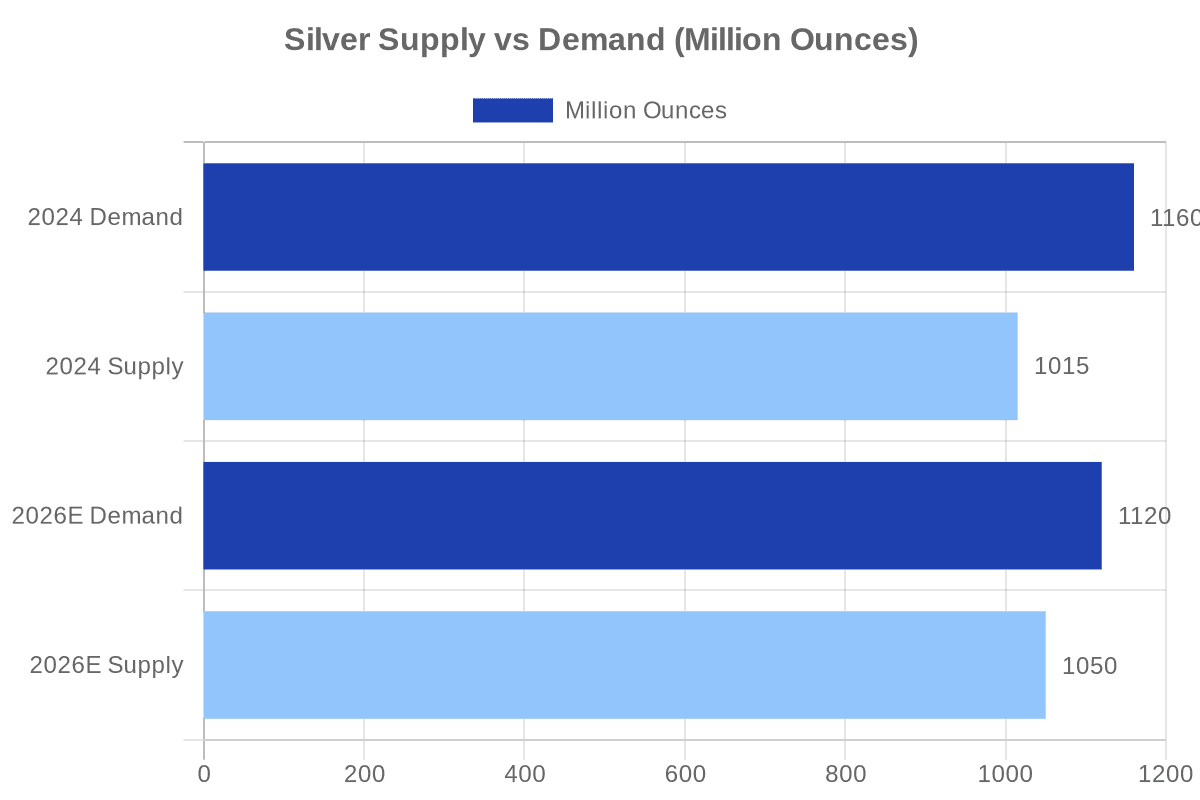
The silver market has run a structural supply deficit for five straight years, and 2026 makes it six. The Silver Institute projects a 67-million-ounce shortfall this year as industrial consumption continues outpacing mine supply (Silver Institute, 2026). The accumulated deficit between 2021 and 2025 sits at roughly 900 million ounces, and that pressure on known above-ground stockpiles isn't easing anytime soon.
That's the bull case in one sentence: more silver gets used than gets mined, year after year.
But “good investment right now” depends on your entry point. Silver already ran hard in 2025. If you're buying because you saw the headlines, you're buying after the move. That doesn't mean it's too late. Supply deficits don't resolve overnight. But your risk-reward profile looks different from someone who bought at $25 two years ago.
Why Silver Demand Keeps Growing
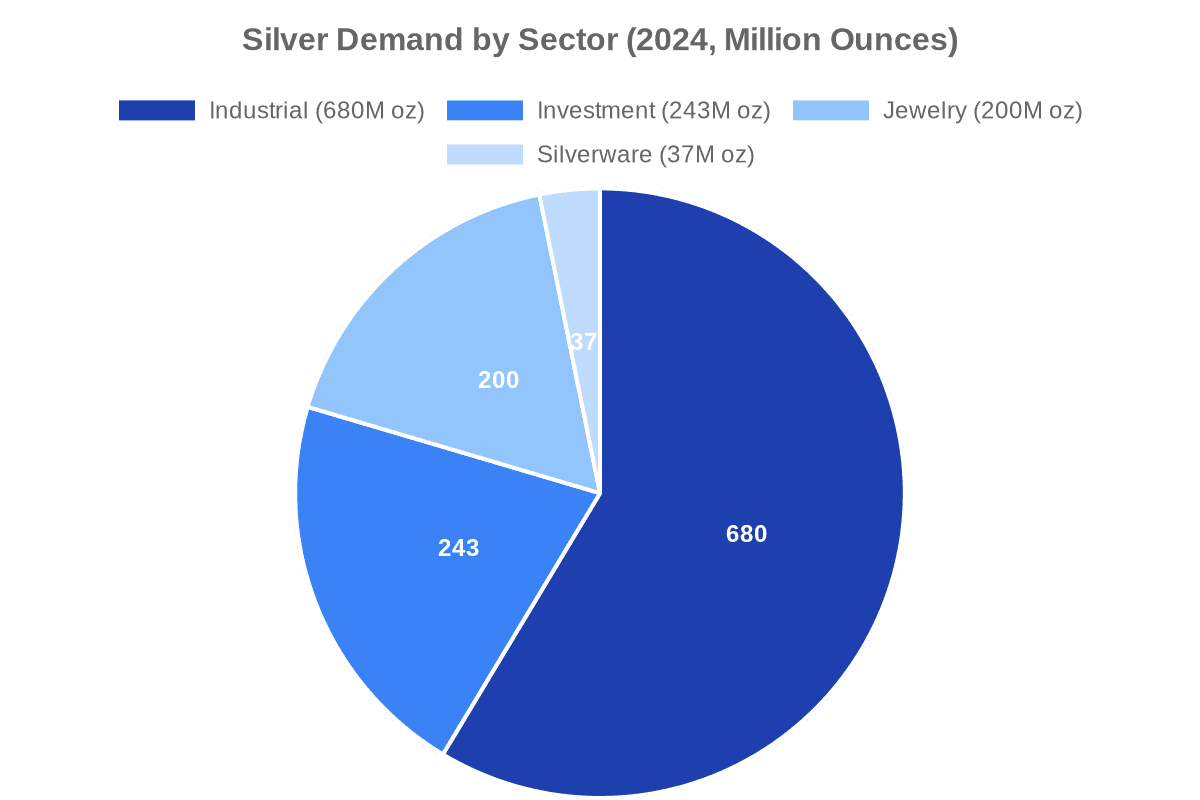
Total silver demand reached 1.16 billion ounces in 2024, with industrial applications representing over 58% of that total (World Silver Survey, 2025). On the supply side, mine production combined with recycling brought in only 1.015 billion ounces. That leaves a shortfall of about 149 million ounces.
What's driving the industrial side? Solar panels, mostly. The photovoltaic industry consumed 197.6 million ounces in 2024, representing 19% of total global silver demand, up from just 5% in 2014 (Silver Institute, 2025). Electric vehicles, 5G infrastructure, and data centers add to the pile.
“Silver is scarce. We don't recover all the silver used in industrial processes; there isn't a large above-ground stockpile,” says John Ciampaglia of Sprott, in the firm's 2026 outlook.
What Are the Benefits of Investing in Silver?
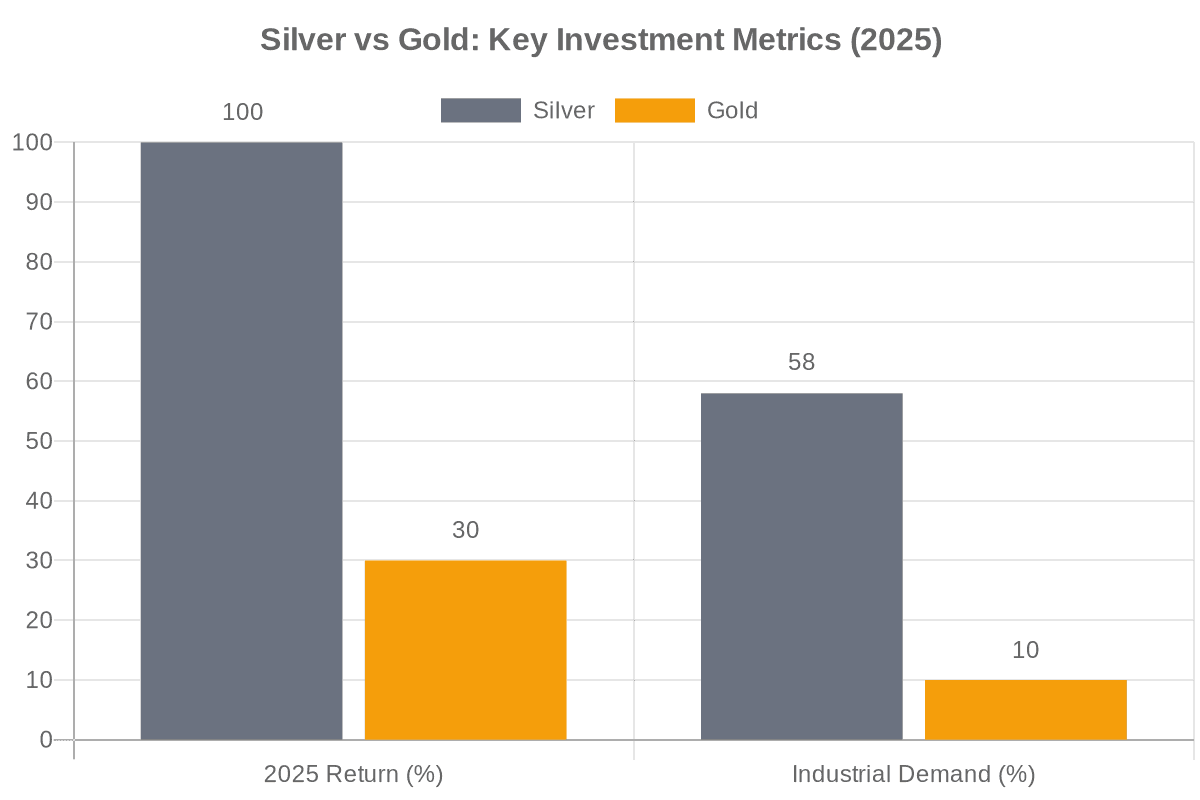
Silver returned roughly 100% in 2025 alone, and between January 1990 and December 2024, the metal gained 467% in nominal terms (Gainesville Coins, 2025). That's not a steady climb. Silver is streaky. But the long-term direction has been up, and the reasons behind it aren't going away.
Portfolio Diversification and Inflation Protection
Silver tends to move differently from stocks and bonds. When equity markets sell off on recession fears, silver often holds or gains value as investors shift toward tangible assets. During the 1970s stagflation era, silver delivered 1,546% returns while inflation ate through cash and bonds (Gainesville Coins, 2025).
Fair warning: silver's inflation hedge record is inconsistent. It flopped during the 1990s when real interest rates were positive and performed poorly in low-inflation decades. It shines brightest when inflation runs above 5% annually, showing strong positive correlation with CPI in the 0.7-0.9 range during those periods.
The honest answer? Silver works as a partial inflation hedge in specific conditions. Don't count on it as your only protection.
Industrial Demand From Solar and EVs
Here's what separates silver from gold. Gold is mostly decorative. Jewelry and central bank vaults account for the bulk of its demand. Silver has a day job.
Over half of all silver consumed goes to industry (Morgan Stanley, 2025). Solar panels alone took 197.6 million ounces in 2024. Each panel contains around 20 grams of silver. Battery electric vehicles use 25-50 grams per car. As renewable energy adoption scales (the IEA projects 220 million electric vehicles on the road by 2030), industrial demand for silver has a structural tailwind that gold simply doesn't have.
One caveat: technology evolves. Manufacturers are actively working to reduce silver content per solar cell (a process called “thrifting”), and the Silver Institute's 2025 survey projects some demand decline from PV efficiency gains. The demand story is real, but it's not a straight line up.
Lower Entry Point Than Gold
Silver trades at a fraction of gold's price. At the current spot price of $53.35 per ounce, silver gives smaller investors a way to build a meaningful precious metals position without needing five figures. You can buy a single ounce of silver for less than a decent dinner out.
That lower price point also means silver is practical for dollar-cost averaging — buying small amounts regularly rather than making one large purchase and hoping you timed it right.
What Are the Risks of Investing in Silver?
“Silver is often described as ‘gold on steroids.’ That leverage works in both directions — amplifying gains and drawdowns,” explains Hiren Chandaria of Monetary Metals in a CBS News interview (January 2026).
Volatility and Price Swings
Silver's price volatility can run two to three times greater than gold's on any given day (Morgan Stanley, 2025). The market is smaller, less liquid, and more sensitive to shifts in economic sentiment. When things go wrong, silver drops faster and harder than gold.
The practical problem with volatility isn't just the math. It's the psychology. If a 15% drawdown in a month makes you sell, silver is going to be an expensive education.
No Dividends or Interest Income
Physical silver and most silver ETFs don't pay dividends. Your return comes entirely from price appreciation. If silver goes sideways for five years (it did from 2013 to 2018), you're sitting on dead capital that could have been generating income in bonds or dividend-paying stocks.
Silver mining stocks are the exception. Some miners pay dividends, but you're taking on company-specific risk (poor management, mine accidents, political instability) on top of silver price risk.
How Does Silver Compare to Gold as an Investment?
The gold-to-silver ratio measures how many ounces of silver buy one ounce of gold. The historical average sits around 60-65:1 (MacroTrends, 2026). When the ratio spikes above 80:1, it historically signals that silver is cheap relative to gold and due for catch-up performance.
| Feature | Silver | Gold |
|---|---|---|
| Volatility | 2-3x higher than gold | Lower, steadier |
| Industrial demand share | 58%+ of total demand | ~10% of total demand |
| Yield | None (physical/ETF) | None (physical/ETF) |
| Supply dynamics | Structural deficit since 2021 | Relatively balanced |
| Inflation hedge | Strong in high-inflation (>5%) | More consistent across conditions |
| US tax treatment | 28% max (collectible rate) | 28% max (collectible rate) |
Silver tends to outperform gold during precious metals bull runs. It's the more volatile, higher-beta play. But it underperforms during bear markets and periods of dollar strength. If you want stability within precious metals, gold is the safer pick. If you want greater upside potential and can tolerate the turbulence, silver has more room to run.
How Can You Invest in Silver?
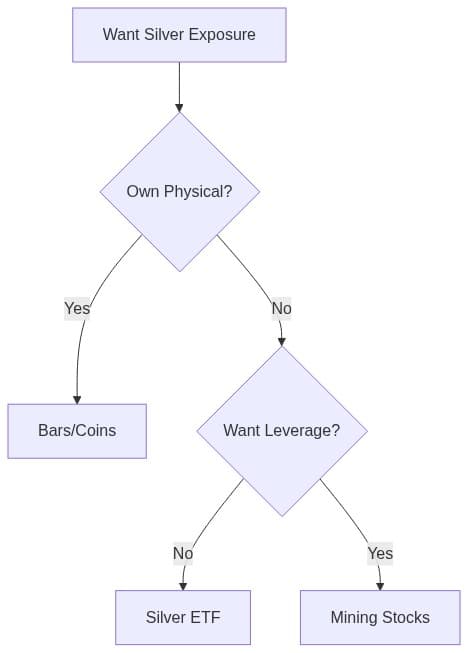
Four main paths exist, and the right one depends on your goals, budget, and how involved you want to be. For a deeper look at price movements, check our silver technical analysis.
Physical Silver (Bars and Coins)
Buying bars or coins gives you direct ownership. No counterparty risk, no reliance on a fund manager or exchange. Government-minted coins (American Silver Eagles, Canadian Maple Leafs) carry the most liquidity and smallest premiums relative to spot price.
The trade-off: storage and insurance. Silver's lower price-per-ounce means you need considerably more space than gold for the same dollar value. A $10,000 position in silver weighs over 100 ounces, roughly 7 pounds. You'll need a safe, a deposit box, or a vaulting service, and those costs erode returns over time.
Silver ETFs and Mutual Funds
ETFs like the iShares Silver Trust (SLV) track silver's spot price by holding physical bars in vaults. You buy and sell shares like any stock, with no storage worries. Expense ratios typically run around 0.50% annually, often cheaper than storing physical silver yourself.
The trade-off? You don't own silver. You own shares in a fund that owns silver. During a genuine financial crisis, the exact scenario where you might want precious metals most, that distinction matters.
Silver Mining Stocks
Companies like First Majestic Silver, Pan American Silver, and Wheaton Precious Metals offer leveraged exposure to silver prices. When silver rises 20%, a well-run miner might gain 40-60% because production costs stay roughly fixed while revenue climbs.
That leverage cuts both ways. Mining stocks carry operational risk, political risk (many mines sit in developing countries), and management risk that pure silver exposure avoids. They're equities first, silver exposure second.
How Much of Your Portfolio Should Be in Silver?
Most financial advisors recommend limiting precious metals to 5-10% of a diversified portfolio (CBS News, 2026). Within that bucket, a 3-5% allocation to silver specifically is the standard guidance for investors who want meaningful exposure without overconcentrating in a volatile asset.
Here's the part most guides skip: your allocation should reflect why you're buying silver. If it's an inflation hedge, you need enough to actually protect purchasing power — 2% won't move the needle. If it's a speculative bet on supply deficits, a smaller position that you can tolerate losing is smarter than a concentrated wager that wrecks your sleep.
What Drives Silver Prices?
Silver prices respond to a mix of industrial fundamentals, investor sentiment, currency movements, and monetary policy. Track the live silver chart and daily silver predictions for current price action.
Industrial demand accounts for over 58% of total consumption, more than any other precious metal. When manufacturing picks up globally, silver demand rises. When recession fears build, industrial demand drops and drags the price, even if investment demand holds steady.
The US dollar has an inverse relationship with silver. A weaker dollar (often during rate cuts or fiscal expansion) tends to push silver higher because it becomes cheaper for buyers using other currencies.
Interest rates affect silver's opportunity cost. High rates make holding a non-yielding asset less attractive compared to bonds or savings accounts. When rates drop, the gap narrows and silver becomes more competitive.
Supply constraints provide a floor. With the silver market running consecutive deficits and mine supply growing at barely 1% per year, any demand spike hits a wall of limited supply. That structural tightness is why analysts at J.P. Morgan project silver could average $81 per ounce in 2026 (Advisor Perspectives, 2026).
View our full silver market analysis for the latest supply-demand breakdown.
The Bottom Line on Silver as an Investment
Silver is a reasonable investment for beginners who want precious metals exposure with more upside potential than gold — but only as a small, defined piece of a broader portfolio. The supply deficit is real, industrial demand is structural, and the entry point is accessible. The risks are equally real: no yield, sharp volatility, and inconsistent inflation protection.
A 3-5% allocation through a silver ETF is the simplest starting point. If you want direct ownership, government-minted coins offer the best liquidity. Either way, don't invest money you'll need within the next two years — silver can stagnate or drop 30% before the long-term thesis plays out.
Ready to track silver's price movements? Explore our silver price forecast for the latest outlook and predictions.
Silver investments carry risk. Prices can decline sharply and without warning. This article is for educational purposes only and does not constitute financial advice. Consult a licensed financial advisor before making investment decisions.
Frequently Asked Questions
Is silver a better investment than gold?
Not better — different. Silver offers higher upside potential because of its smaller market and industrial demand tailwinds, but it's 2-3x more volatile than gold. Gold provides steadier diversification. Most advisors suggest holding both: heavier gold weighting for stability, silver for growth potential.
How much money do you need to start investing in silver?
You can start with under $100. A single ounce of silver currently costs around $53.35, and fractional silver rounds sell for less. Silver ETFs like SLV allow even smaller entry points, and many brokerages allow fractional purchases.
What is the safest way to invest in silver?
A physically-backed silver ETF (iShares Silver Trust or Sprott Physical Silver Trust) is the safest route for most beginners. These funds hold real silver bars in audited vaults. You buy and sell shares through a standard brokerage account with no personal storage costs.
Does silver lose value over time?
Silver has trended upward over decades despite significant volatility. Between 1990 and 2024, it gained 467% in nominal terms and 129% after adjusting for inflation. It doesn't lose value permanently, but it can stagnate for years — silver traded between $14 and $20 from 2014 through 2019.
Is silver taxed differently than stocks?
In the United States, yes. The IRS classifies physical silver and most silver ETFs as collectibles, subject to a maximum long-term capital gains rate of 28% — compared to 20% for stocks and bonds. Silver mining stocks are taxed as regular equities at the standard capital gains rate.